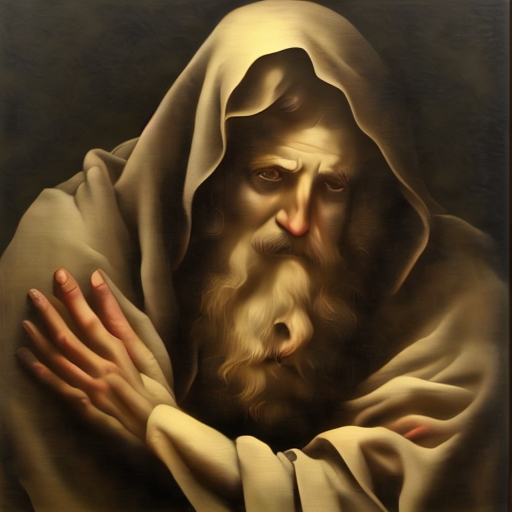


As the reader knows, I have been spending time dealing with people on the internet with different issues or questions. Recently, I came across a man who was absolutely convinced Jesus did not exist and that there is zero evidence whatsoever for His existence as a historical figure. The claim directly is that there is no evidence prior to the 15th century that mentions Jesus. Not only is this false, but it is a blatant display of willful ignorance. Here is an official Atheistic stance on the historicity of Jesus, just to present an opposing view. https://www.atheists.org/activism/resources/did-jesus-exist/
If you want to make the argument that history has been changed by the elite…You have made yourself god and your own arbiter of history. A Question for those people: Why would the elite allow a belief system that flies in the face of global elite power? The book of Revelation is designed to keep Christians separated from the grip of Tyranny, and to reject the law of the land when it comes into conflict with the Biblical text. That’s a massive issue for governmental control.
In this post, I will present the reader with sources from primarily non-Christian writers. which show that Jesus at the very least was a real life historical man, just as real as Abraham Lincoln, Martin Luther King Jr, or you.
Non-Christian Sources
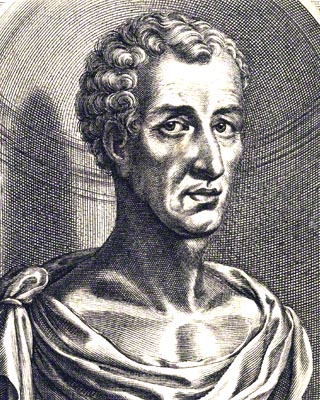
Lucian of Samosata in his work The Death of Peregrine written sometime around 165 AD(Roughly 130 years after the supposed death of Jesus): ““The Christians, you know, worship a man to this day,–the distinguished personage who introduced their novel rites, and was crucified on that account…. You see, these misguided creatures start with the general conviction that they are immortal for all time, which explains the contempt of death and voluntary self-devotion which are so common among them; and then it was impressed on them by their original lawgiver that they are all brothers, from the moment that they are converted, and deny the gods of Greece, and worship the crucified sage, and live after his laws.” Though he did not name Jesus in the quotation, we can make certain inferences as to who he is speaking of. A crucified “sage” who accepts worship, which convinces his followers to deny the gods of Greece and that they are given eternal life.
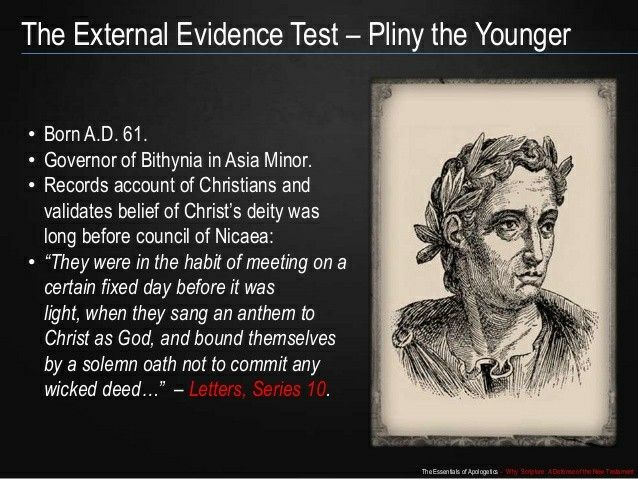
Pliny the Younger a Roman governor writing a letter to Emperor Trajan around 110 AD(Roughly 80 years after the death of Jesus): “Others, whose names were given me by an informer, first said that they were Christians and afterwards denied it, declaring that they had been but were so no longer, some of them having recanted many years before, and more than one so long as twenty years back. They all worshipped your image and the statues of the deities, and cursed the name of Christ. But they declared that the sum of their guilt or their error only amounted to this, that on a stated day they had been accustomed to meet before daybreak and to recite a hymn among themselves to Christ, as though he were a god, and that so far from binding themselves by oath to commit any crime, their oath was to abstain from theft, robbery, adultery, and from breach of faith, and not to deny trust money placed in their keeping when called upon to deliver it.” Again, not a direct mention of the name Jesus or Iesus, but here he is mentioning a group of people who once worshipped Trajan but were converted to follow “Christ” as though he were a god. Their faith kept them from stealing and committing adultery.

Josephus, a Roman/Jewish Historian in his historical work “Antiquities of the Jews” or “Testimonium Flavianum” written around 95 AD(Roughly 60 years after the death of Jesus): “At this time there was a wise man who was called Jesus. His conduct was good, and [he] was known to be virtuous. And many people from among the Jews and the other nations became his disciples. Pilate condemned him to be crucified and to die. But those who had become his disciples did not abandon his discipleship. They reported that he had appeared to them three days after his crucifixion, and that he was alive; accordingly he was perhaps the Messiah concerning whom the prophets have recounted wonders” Here we see a direct reference to the name Jesus who was wise, virtuous, was put to death by Pontius Pilate (as recorded by the Biblical text), was perhaps the Messiah, and had disciples who believed He rose from the dead.
https://www.worldhistory.org/tacitus
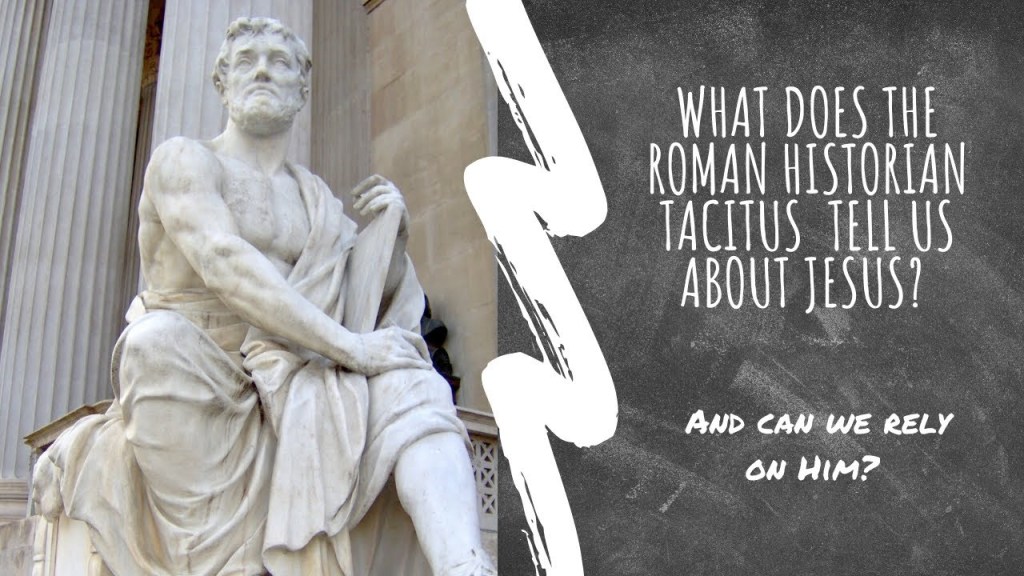
Tacitus a Roman historian from his writing “Annals” (referring to the time period of 14-68 AD): “Consequently, to get rid of the report, Nero fastened the guilt and inflicted the most exquisite tortures on a class hated for their abominations, called Christians by the populace. Christus, from whom the name had its origin, suffered the extreme penalty during the reign of Tiberius at the hands of one of our procurators, Pontius Pilatus, and a most mischievous superstition, thus checked for the moment, again broke out not only in Judæa, the first source of the evil, but even in Rome, where all things hideous and shameful from every part of the world find their centre and become popular.” Tacitus mentions Christians who were stirring up problems in the Roman empire, as well as reference to a figure called “Christus” who suffered “the extreme penalty” during the reign of Tiberius at the hands of Pontius Pilatus. Another reference to Roman leaders that are mentioned in Biblical text.

The Talmud of the Jews created from 400-700 AD which reforms the Jewish faith after the destruction of the 2nd temple in 70AD. (Roughly 370 years after the death of Jesus): “Jesus practiced magic and led Israel astray…nor shall any plague come near your house’ (means) that you will not have a son or a disciple who burns his food like Jesus of Nazareth…Our rabbis have taught that Jesus had five disciples: Matthai, Nakai, Nezer, Buni and Todah…They brought Matthai to (to trial). He said, ‘Must Matthai be killed? For it is written, ‘When (mathai) shall I come and appear before God?’” (Psalm 92:2) They said to him, “Yes Matthai must be killed, for it is written, ‘When (mathai) he dies his name will perish’” (Psalm 41:5). They brought Nakai. He said to them, “Must Nakai be killed? For it is written, “The innocent (naqi) and the righteous will not slay’” (Exodus 23:7). They said to him, “Yes, Nakai must be kille, for it is written, ‘In secret places he slays the innocent…It was taught: On the day before the Passover they hanged Jesus. A herald went before him for forty days (proclaiming), “He will be stoned, because he practiced magic and enticed Israel to go astray. Let anyone who knows anything in his favor come forward and plead for him.” But nothing was found in his favor, and they hanged him on the day before the Passover” The Jewish people, who are said to have rejected Jesus in the Biblical text, here in the Talmud have their greatest religious leaders speaking on the history of Jesus and what they understand it to be. They name certain disciples, and the time of His death as displayed by the Biblical text which had been written before the time of the Talmud.
The Toledot Yeshu, a retelling of the story of Jesus (too long for me to post in its entirety) at the latest written at around 1000 AD (970 years after the death of Jesus): “in Jewish reckonging, it being ca 90 B.C…great misfortune befell Israel, when there arose a certain disreputable man of the tribe of Judah, whose name was Joseph Pandera…Near his house dwelt…Miriam…Miriam gave birth to a son and named him Yehoshua, after her brother…This name later deteriorated to Yeshu (“Yeshu” is the Jewish “name” for Jesus…Yeshu was an illegitimate child and the son of a niddah… it was necessary for Yeshu to flee to Upper Galilee…Yeshu proclaimed, “I am the Messiah; and concerning me Isaiah prophesied and said, ‘Behold, a virgin shall conceive, and bear a son, and shall call his name Immanuel.’” He quoted other messianic texts, insisting, “David my ancestor prophesied concerning me: ‘The Lord said to me, thou art my son, this day have I begotten thee.’”…Yeshu spoke over the man the letters of the Ineffable Name, and the leper was healed…they worshipped him as the Messiah, Son of the Highest...Yeshu spoke up: “Madam, I am the Messiah and I revive the dead.” A dead body was brought in; he pronounced the letters of the Ineffable Name and the corpse came to life…He spoke the same letters over a millstone that had been placed upon the waters. He sat in it and it floated like a boat. When they saw this the people marveled…Yeshu said: “It is spoken of me, ‘I will ascend into heaven.’” He lifted his arms like the wings of an eagle and he flew between heaven and earth, to the amazement of everyone…Yeshu was seized…To allay his thirst they gave him vinegar to drink. On his head they set a crown of thorns…That year the Passover came on a Sabbath day. On the eve of the Passover, Yeshu, accompanied by his disciples, came to Jerusalem riding upon an ass…One of them, Judah Iskarioto apprised the Sages that Yeshu was to be found in the Temple, that the disciples had taken a vow by the Ten Commandments not to reveal his identity but that he would point him out by bowing to him…Yeshu was put to death on the sixth hour on the eve of the Passover and of the Sabbath…On the first day of the week his bold followers came to Queen Helene with the report that he who was slain was truly the Messiah and that he was not in his grave.” This is not a Christian source but it sure gives all the details needed to show some authenticity to the Biblical accounts. At the very least, for the last 1000 years prior to the writing of this document there have been people who believed Jesus performed miracles, claimed to be the Messiah, was killed, and supposedly disappeared from his grave.
More Non-Christian Sources

Gaius Suetonius Tranquillua a Roman Historian AD 117-138 (Rougly 80 years past the death of Jesus): “Because the Jews at Rome caused constant disturbances at the instigation of Chrestus [Christ], he [Claudius] expelled them from the city [Rome]…Nero inflicted punishment on the Christians, a class of men given to a new and mischievous religious belief” A mention of the Christians and the “Chrestus” who were creating trouble in Rome.
Graece Magicae Papyri, a set of papyri that were found in Egypt that have been dated from around 100AD-400AD in reference to a group of Jews that used Jesus’ name to cast out demons. “I adjure you by Jesus, the God of the Hebrews”
Caesar Trajan who lived roughly from 50-120 AD in a response to a letter written to him on how to deal with Christians: “The method you have used, my dear Pliny, in investigating the cases of those who are accused of being Christians is extremely proper. No search should be made for these people; when they are accused and found to be guilty they must be punished; with the restriction, however, that when the individual denies he is a Christian, and gives proof that he is not (that is, by adoring our gods) he shall be pardoned on the ground of repentance, even though he may have formerly incurred suspicion. Documents without the accuser’s signature must not be admitted in evidence against anyone, since this introduces a very dangerous precedent, and is by no means consistent with the spirit of the age.” – Pliny letters X, 97″
Christian sources outside of the Bible
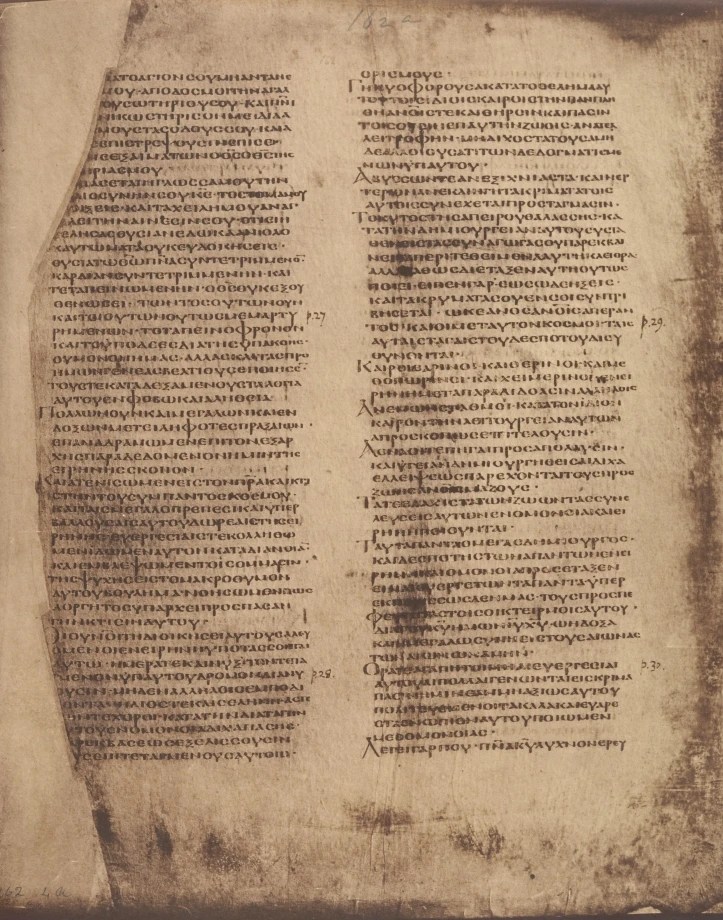
Pontius Pilate a Roman Procurator and Governor at the time of Jesus. He died somewhere around 40 AD. (Source derived from quotations of Christian writers who quoted the documents associated with the “Acts of Pontius Pilate”: “The ancient Romans were scrupulously careful to preserve the memory of all remarkable events which happened in the city; and this was done either in their “Acts of the Senate” (Acts Senatus), or in the “Daily Acts of the People” (Acta Diurna Populi), which were diligently made and kept at Rome . . . In like manner it was customary for the governors of provinces to send to the emperor an account of remarkable transactions that occurred in the places where they resided, which were preserved in the “Acts of” their respective governments . . . we find, long before the time of Eusebius [3rd century], that the primitive Christians, in their disputes with the Gentiles, appealed to these “Acts of Pilate” . . . Thus, Justin Martyr, in his first “Apology” for the Christians, which was presented to the Emperor Antoninus Pius [A.D. 138-161] and the senate of Rome, about the year [A.D.] 140, having mentioned the crucifixion of Jesus Christ and some of its attendant circumstances, adds, “And these things were done, you may know from the ‘Acts’ made in the time of Pontius Pilate.” https://www.neverthirsty.org/about-christ/historical-quotes/pontius-pilate/
Caesar Hadrian (Lived roughly 80-140AD) writing a letter to Minucius Fundanus asking how to deal with Christians: “I do not wish, therefore, that the matter should be ignored without examination, so that these men may not be harassed, nor an opportunity given for malicious proceedings to be offered to informers. If, therefore, the provincials can clearly show their charges against these Christians, so as to answer before the tribunal, let them pursue this course only, but not just petitions, and mere outcries against Christians. For it is more fitting, if any one brings an accusation, that you should examine it.” – Eusebius, Ecclesiastical History, IV – This is a quote from a Christian source who quoted the letter.
Julius Africanus + Thallus: Julius Africanus(Born Roughly 160AD), a Christian historian quoting Thallus(Roughly 52AD) another Christian Historian: “On the whole world there pressed a most fearful darkness; and the rocks were rent by an earthquake, and many places in Judea and other districts were thrown down. This darkness Thallus, in the third book of his History, calls, as appears to me without reason, an eclipse of the sun“
Julius Africanus + Phlegon – Julius Africanus(Born Roughly 160AD), a Christian historian quoting Phlegon a non-Christian Greek historian(Roughly 80-140AD): “Phlegon records that, in the time of Tiberius Caesar, at full moon, there was a full eclipse of the sun from the sixth to the ninth hour…
Origen + many other sources: An early Christian writer and historian who compiled many quotations from previous sources. “Now Phlegon, in the thirteenth or fourteenth book, I think, of his Chronicles, not only ascribed to Jesus a knowledge of future events . . . but also testified that the result corresponded to His predictions.” (Origen Against Celsus, Book 2, Chapter 14)...And with regard to the eclipse in the time of Tiberius Caesar, in whose reign Jesus appears to have been crucified, and the great earthquakes which then took place … ” (Origen Against Celsus, Book 2, Chapter 33)…Jesus, while alive, was of no assistance to himself, but that he arose after death, and exhibited the marks of his punishment, and showed how his hands had been pierced by nails.” (Origen Against Celsus, Book 2, Chapter 59)”
The Gospels
Though many like to dismiss the gospels (Matthew, Mark, Luke, and John), they ARE legitimate evidence for the historicity of Jesus. Anything mentioning Him in a historical way does count as evidence for the reality of His existence. Though this may annoy those who wish to erase religion and Christianity from the world, I am sorry to say “Facts don’t care about your feelings”. All gospel accounts are established to have been written before 80AD, as well as all of the Pauline letters such as Corinthians, Romans, etc.
At the bottom of this page is a list of sources for you the reader to check out. Within the article there are embedded in links to sites and videos, to get even more information. What I have provided here are only a few of the sources that attest to Jesus being a real person, or at the very least that there was a devout group of people who followed a man they called the “Christ” before 100 AD. The claim that there isn’t a single bit of evidence before the 15th century AD for the historicity of Jesus has not only been displayed as false in this listing, but the simple existence of the Gospel accounts proves it false. Even if the Gospels were our only account for Jesus…there would be some evidence of Jesus’ existence.
If you are someone who wants to really get into this subject, please check out all the sources I have provided as well as an exceptional book that goes into the reliability of Jesus historically, but also of the Biblical text and beliefs of the Christians…Evidence that Demands a Verdict : Josh & Sean McDowell is going to be your best friend.
Hebrews 11:1: “Now faith is the substance of things hoped for, the evidence of things not seen.” 1 Peter 3:15: “But in your hearts revere Christ as Lord. Always be prepared to give an answer to everyone who asks you to give the reason for the hope that you have. But do this with gentleness and respect“
https://www.neverthirsty.org/about-christ/historical-quotes
https://en.wikipedia.org/wiki/Historicity_of_Jesus
https://en.wikipedia.org/wiki/Historical_Jesus
https://www.history.com/news/was-jesus-real-historical-evidence
 Baqash : To Seek