
I have recently felt a need to take another look at the claim of Mary the Mother of Jesus. Primarily, the claim that she is a “perpetual virgin”, meaning she never had sexual relations with her husband Joseph. This is the link to the original article which tackles the subject from a different angle. https://baqash.org/2024/03/05/mary-the-perpetual-virgin-and-mother-of-god/
With this, I took a hard look at scripture and the verses which apply to this topic, cultural norms of the time, as well as early Christian writings which speak on the topic.
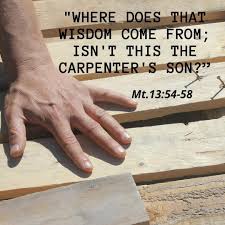
Isn’t this the Carpenters son?
To start, lets go over the verses which seem to display that Jesus had siblings, seemingly born to Mary.
Mark 6:3″ 3 Isn’t this the carpenter? Isn’t this Mary’s son and the brother of James, Joseph,[a] Judas and Simon? Aren’t his sisters here with us?” And they took offense at him. — Matthew 13:55″ 55 “Isn’t this the carpenter’s son? Isn’t his mother’s name Mary, and aren’t his brothers James, Joseph, Simon and Judas?“
If one only reads this section of scripture, it would be very easy to come to the conclusion that “Jesus had brothers and sisters. Mary must have had sexual relations with her husband”. However, scripture cannot be understood unless you have a fully rounded view of it. Later in Mark and Matthew, James and Joseph are described as having different parents as to Jesus.
Matthew 27:56″56 Among them were Mary Magdalene, Mary the mother of James and Joseph,[a] and the mother of Zebedee’s sons.” Mark 15:40″40 Some women were watching from a distance. Among them were Mary Magdalene, Mary the mother of James the younger and of Joseph,[a] and Salome.”
To myself, this makes it clear that at least James, Joseph, and Salome(A Female name not mentioned in the previous texts, but is associated with James and Joseph. This insinuates she would be one of the “Sisters”) were from a mother different to Jesus. This already seeds doubt that Matthew 13:55 and Mark 6:3 is evidence that Jesus had siblings, but we can get further evidence from other sources.
For the remaining names of Simon and Judas, we can go to early church writings to understand further detail. We also will get confirmation that the Mary referenced in Matthew 27:56 and Mark 15:40 is most certainly not the mother of Jesus.
Jerome (347-420 AD) Against Helvidius: “We understand the brethren of the Lord not as sons of Joseph, but as cousins of the Savior, the sons of Mary, the sister of the Lord’s mother” “Judas, who is also called Lebbaeus and Thaddaeus…was not the son of Mary, but of another Mary, the wife of Clopas”
Didymus the Blind (313 AD – 398 AD – Commentary on Jude: “Jude, who wrote the catholic epistle, was the Brother of the sons of Joseph, and he was called the Lord’s brother, though not truly so according to nature”
Epiphanius of Salamis(310-403 AD) Panarion: “For Joseph had children by a former wife, and these are they who are called the Lord’s brethren”…”Jude, who is called the Lord’s brother, was Joseph’s son from a former wife.”
Origen (184-253 AD) Commentary on Matthew: “The brethren of Jesus are sons of Joseph from a former wife, whom he married before Mary…among whom was Jude”
Augustine of Hippo (354-430 AD)”Our Lord’s brethren are called so not because they were born of the Virgin Mary, but because they were related to Him by kinship”
Protoevangelium of James(2nd Century): “Joseph said, “I have sons, and am an old man; and she is a young girl.”
Eusebius – Ecclesiastical History 3.11: “After James the Just had suffered martyrdom….they all with one consent pronounced Symeon(Simon), the son of Clopas, of whom the Gospel makes mention(John 19:25″ 25 Near the cross of Jesus stood his mother, his mother’s sister, Mary the wife of Clopas, and Mary Magdalene.)to be worthy of the episcopal throne. He was, as they say, a cousin of the Savior”
We see then, after the cumulative evidence of Scripture and the Early Christian Writers, that the use of Mark 6:3, and Matthew 13:55 to try to show Jesus had siblings from his mother Mary, has no real weight to it. Those mentioned in the verses are either from another Mary(the wife of Clopas), or from a prior marriage of Joseph(the Adopted Father of Jesus).
And did not know her [until]
Matthew 1:25: “Then Joseph, being aroused from sleep, did as the angel of the Lord commanded him and took to him his wife,and did not know her [until] she had brought forth a Son. And he called His name Jesus.“
Many would claim at first glance, that the phrase “Did not know her until she had brought forth her firstborn Son” insinuates that after Mary had Jesus, Joseph and Mary had sexual relations.
However, if one has a fully rounded out view of Scripture, this would not be a conclusion which could be made so easily. In fact, there would be no good reason to conclude that the “Until” here says anything at all about what happens after the birth of Jesus.
Here are a few examples of the term “until” being used.
1 Corinthians 15:25: ” For He must reign until He has put all His enemies under His feet.”
1 Timothy 4:13:”13 Until I come, give your attention to the public reading, to exhortation, and teaching.“
Psalms 110:1:” The Lord says to my Lord: “Sit at My right hand Until I make Your enemies a footstool for Your feet.”
Clearly if “until” insinuates a change afterwards, we have a severe issue throughout the Bible. God reigns even after He puts His enemies under His feet. Timothy was not told to stop reading and teaching after Paul returned to him, and Jesus who sits at the right had of the Father doesn’t cease to sit at His right hand after His enemies being made a footstool.
“Firstborn”
There are some translations which use the term “firstborn son”. For example Matthew 1:25″25 and did not know her till she had brought forth her firstborn Son. And he called His name Jesus.” Luke 2:7: “7 And she gave birth to her firstborn son; and she wrapped Him in cloths, and laid Him in a manger, because there was no room for them in the inn.”
To some, the phrase “till she had brought forth her firstborn son” may insinuate that there would be more sons after the “first”. Otherwise, there would be no point in specifying “firstborn”.
However, this would present us with an issue when looking at Scripture as a whole. If we interpret this passage as such, we need to interpret the rest of the Bible the same way, as to stay intellectually consistent.
1 Colossians 1:15: “...His beloved Son, 14 in whom we have redemption, the forgiveness of sins.15 He is the image of the invisible God, the firstborn of all creation
Hebrews 1:6: “6 And again, when God brings his firstborn into the world, he says,“Let all God’s angels worship him.”
Exodus 4:22″ 22 Then say to Pharaoh, ‘This is what the Lord says: Israel is my firstborn son“
Psalms 89:27: “And I will appoint him to be my firstborn, the most exalted of the kings of the earth.
Argument from Jewish Culture
It is clear that our own cultural understanding of terms like “betrothal” clouds the mind when interpreting scripture.
Luke 1:27: “27 to a virgin betrothed to a man whose name was Joseph, of the descendants of David; and the virgin’s name was Mary.“
In Jewish culture, betrothal was not what we think of as “engaged”. The betrothal period is where the ceremony of marriage has already been done, and it is expected that the Husband and Wife are to consummate the marriage. This betrothal period is where the husband goes to “prepare a place” for the wife in which they can raise their family. Christ goes to “prepare a place” for the Church, his betrothed bride.
Mary and Joseph were already married when she became pregnant, and they had not had sex.
Deuteronomy 22:23–24:”“If there is a betrothed virgin… the man… violated his neighbor’s wife.” Matthew 1:18–19:”“When his mother Mary had been betrothed to Joseph… Her husband Joseph… planned to divorce her quietly.”
Modern note summarizing the ancient practice — NABRE footnote on Matthew 1:18:”“betrothal was the first part of the marriage, constituting a man and woman as husband and wife… followed some months later by the husband’s taking his wife into his home”
Mary committed herself to celibacy at a young age, and the early christian writers knew this.
Numbers 30:3–5:”If a woman makes a vow to the LORD… and her father hears her vow… then all her vows shall stand.“
Numbers 6:2–3:”“When a man or woman makes a special vow, the vow of a Nazirite, to dedicate himself to the LORD…”
1st century AD — Philo, Hypothetica 11.14: “They repudiate marriage… for no one of the Essenes ever marries a wife.”https://www.earlyjewishwritings.com/text/philo/book37.html?utm_source=chatgpt.com
c. AD 75 — Josephus, Jewish War 2.120:“There is another order of Essenes… [who] differ… in their views about marriage.”https://www.ccel.org/ccel/s/schaff/hcc1/cache/hcc1.pdf?utm_source=chatgpt.com
c. AD 150 — Protoevangelium of James: ““Thou hast been chosen by lot to take into thy keeping the virgin of the Lord.”…“As the Lord my God lives, I am pure before Him, and know not a man.”
AD 383 — Jerome, Against Helvidius: ““the mother of His Son… continued a Virgin after her son was born.”
AD 401 — Augustine, Of Holy Virginity 4“Which assuredly she would not say, unless she had before vowed herself unto God as a virgin.”
AD 374 — Epiphanius, Ancoratus 120:”“the holy ever-virgin Mary”
The early Reformers
It is always a surprise to me when I read about the early protestant reformers and their confirmation that even they who subscribed to “Sola Scriptura”, also concluded that Mary was a perpetual Virgin.
Martin Luther (1483–1546)Sermons on John (1539)Smalcald Articles (1537)Sermons (various):“Christ… was the only Son of Mary, and the Virgin Mary bore no children besides Him.”…“That Son became man, born of the pure, holy Virgin Mary.”…“Mary is the ever-virgin Mother of God.”
John Calvin (1509–1564)Commentary on Matthew 1:25:”“He [Matthew] does not say that she afterwards knew her husband… no just and well-grounded inference can be drawn from these words… that she had children afterwards.”
Huldrych Zwingli (1484–1531)Zwingli Opera (1522):”“I firmly believe that Mary, according to the words of the Gospel, as a pure Virgin brought forth for us the Son of God and in childbirth and after childbirth forever remained a pure, intact Virgin.”
Heinrich Bullinger (1504–1575)Second Helvetic Confession (1566):“Christ was born of the ever-virgin Mary.”
John Wesley (1703–1791)Letter to a Roman Catholic (1749)“I believe that He was made man, joining the human nature with the divine in one person; being conceived by the Holy Ghost, and born of the Virgin Mary, who, as well after as before she brought Him forth, continued a pure and unspotted virgin.”
Conclusion
To conclude, we see through thorough examination of scripture, Jewish sources, and the early Christian writers, that Mary likely took a vow of Celibacy as per normal Jewish practices of the time, she became married to Joseph who was likely previously married with his own children, and Mary continued to never have sexual intercourse through her life.
Criticisms like “Jesus had brothers” can not be substantiated simply by reading two verses from Matthew and Mark; and neither can pointing to terms like “until” be used to insinuate a later action of sexual intercourse between.
When examined more closely, the major objections to the “perpetual virginity” of Mary, lose the weight they are presumed to have. We can then conclude, that the vast amount of Christian history is more reliable than we thought previous, and Mary was more likely than not, to have forever been a virgin through life.
Sources
JEROME — AGAINST HELVIDIUS
https://www.newadvent.org/fathers/3007.htm
EUSEBIUS — ECCLESIASTICAL HISTORY
https://www.newadvent.org/fathers/2501.htm
AUGUSTINE — OF HOLY VIRGINITY
https://www.newadvent.org/fathers/1310.htm
JOHN CHRYSOSTOM — HOMILIES ON MATTHEW
https://www.newadvent.org/fathers/2001.htm
AMBROSE — EXPOSITION OF THE GOSPEL OF LUKE
https://www.newadvent.org/fathers/3401.htm
GREGORY OF NYSSA — WORKS
https://www.newadvent.org/fathers/2904.htm
PROTOEVANGELIUM OF JAMES
https://www.earlychristianwritings.com/text/infancyjames-roberts.html
CALVIN — COMMENTARY ON MATTHEW 1:25
https://www.ccel.org/ccel/calvin/calcom31.ix.xv.html
CALVIN — DIRECT PAGE WITH THE “UNTIL” QUOTE
https://ccel.org/ccel/calvin/calcom33/calcom33.ii.xiii.html
BULLINGER — SECOND HELVETIC CONFESSION
https://www.ccel.org/ccel/schaff/creeds3.iv.xv.html
WESLEY — LETTER TO A ROMAN CATHOLIC
https://www.ccel.org/ccel/wesley/letters.i.v.html
BROTHERS OF JESUS
https://www.newadvent.org/fathers/3007.htm
https://www.newadvent.org/fathers/2501.htm
https://www.earlychristianwritings.com/text/infancyjames-roberts.html
UNTIL (MATTHEW 1:25)
https://www.newadvent.org/fathers/3007.htm
https://www.newadvent.org/fathers/2001.htm
https://www.newadvent.org/fathers/1310.htm
https://www.ccel.org/ccel/calvin/calcom31.ix.xv.html
https://ccel.org/ccel/calvin/calcom33/calcom33.ii.xiii.html
FIRSTBORN
https://www.newadvent.org/fathers/3007.htm
https://www.newadvent.org/fathers/3401.htm
https://www.newadvent.org/fathers/2904.htm
 Baqash : To Seek
Leave a comment