
A long held belief by myself up until very recently, as well as that of many protestant denominations, is that Mary the Mother of Jesus had other children besides Jesus. The claim is that Yes, she was a virgin for the conception of Jesus but after his birth she had multiple other children and had “lost” her virginity in that process. However, I am going to make the argument that we should re-think this belief on part of Biblical evidence, the Early Church Writers, and even some of the most prominent Protestant reformers’ writings. We will also briefly address the issue of “Mary the Mother of God” from a scriptural and reason based perspective.
I understand the topic of Mary is very sensitive, but I hope that we can take a look at this topic with an open mind willing to adjust to what Scripture says, as well as what those of the early Christians believed about her. I will in future articles address the “Immaculate Conception”, and Mary as the “New Eve” and “New Ark of the Covenant” in the future as I am more educated on the matter.
Mary, the Mother of God
Isaiah 7:14-16: “14 Therefore the Lord himself shall give you a sign; Behold, a virgin shall conceive, and bear a son, and shall call his name Immanuel.15 Butter and honey shall he eat, that he may know to refuse the evil, and choose the good.16 For before the child shall know to refuse the evil, and choose the good, the land that thou abhorrest shall be forsaken of both her kings.“ Matthew 1:18,__: “18 This is how the birth of Jesus the Messiah came about…22 All this took place to fulfill what the Lord had said through the prophet: 23 “The virgin will conceive(texetai,τέξεται, Will bear) and give birth to a son, and they will call him Immanuel”[g] (which means “God(Theos Θεός.) with us”).“ Luke 1:41-42: “Elizabeth was filled with the Holy Spirit...’Blessed are you among women, and blessed is the child you will bear! 43 But why am I so favored, that the mother of my Lord (Kyriou,Κυρίου, Word used for God {Not Always, but in most cases} in much of the New Testament-Mark 11:9, Luke 1:15, Acts 2:21) should come to me?‘“
Elizabeth here, filled with the Holy Spirit, as though she is making a proclamation through the influence of the Holy Spirit “Why am I so favored that the mother of my Lord should come to me?” If she isn’t saying Mary is the mother of the Son of God, The Word made flesh, then what is she saying here?
It seems to me on this topic, most people likely feel resistance or reservation because in a way it brings God down to what feels like a Greek Pantheon. It makes it seem as though God, the self existent one, uncreated creator, Divine person outside of space time and matter, has…a Mother, and a Cousin, and relatives outside of that space. In a way it feels as though with the belief that John the Baptist is the Cousin of God, or Mary is the Mother of God, that it brings God to our level or that it makes Him like any other god from history past. Though is that what is happening or is it simply what we feel like is happening? No, Jesus as God has no beginning even if He was birthed by Mary.
Christ was Self Existent as the I AM before creation and simply entered the womb of Mary and was birthed by her. No, God Himself does not have Cousins in the sense that we have cousins. He is not made of matter itself, and is not related to a “cousin” as we are. Jesus in His earthly existence as a man was birthed by a woman, and that woman had relatives. Naturally, that means the God-Man Jesus has a mother and relatives. Is this an issue of the Biblical text, or simply an issue of self bias? It stands to reason that if Jesus is God…then Mary is the Mother of God (In an earthly way, not a self existent eternal way).
The Perpetual Virginity of Mary
As mentioned before, this is a sticking point for Protestants across the world. I understand and sympathize with the issues surrounding this, as I too was very abrasively blocked off to this idea just a short time ago. I only ask the reader to stay open minded and be willing to have your mind changed on this topic.
Mark 6:3: “Is not this the carpenter, the son of Mary, the brother(adelphos,ἀδελφὸς) of James, and Joses, and of Juda, and Simon? and are not his sisters(adelphai,ἀδελφαὶ) here with us? And they were offended at him.“ Jesus’ response: “Jesus said to them, “A prophet is not without honor except in his own town, among his relatives(syngeneusin,συγγενεῦσιν) and in his own home(oikia,οἰκίᾳ).“
The people in Nazareth knew Jesus and His family, so we must address the two words adelphos and adelphai. Well, how does the Biblical text use these words? https://biblehub.com/greek/adelphos_80.htm. Out of the 43 occurrences of the word adelphos in the New Testament, at least 23 of those times the word does not refer to a direct blood brother. The word adelphai according to the Strong’s Concordance occurs 26 times, and at least 10 of those occasions do not refer to a direct blood sister. The two words adelphos and adelphai are not reliably used in scripture to determine what exactly the usage here is and requires more context.
Jesus here specifies “relatives” or syngeneusin. This word specifically does not mean blood sibling. From Strong’s Concordance “From sun and genos; a relative (by blood); by extension, a fellow countryman — cousin, kin(-sfolk, -sman).” From Thayer’s Concordance ” in a wider sense, of the same race, a fellow-countryman” The only other place this word is used is in Luke 2:44:”But they, supposing him to have been in the company, went a day’s journey; and they sought him among their kinsfolk(syngeneusin,συγγενεῦσιν) and acquaintance.“ The root word for syngeneusin is used also in Luke 1:36: “And, behold, thy cousin(syngenis,συγγενίς) Elisabeth, she hath also conceived a son in her old age: and this is the sixth month with her, who was called barren.”. The word syngeneusin does not mean blood brother. Jesus is stating here, after looking closer at the Greek, that the relatives mentioned here are not necessarily blood siblings, but more likely cousins, aunts, or uncles.
Matthew 13:55-57: “Is not this the carpenter’s son? is not his mother called Mary? and his brethren(adelphoi,ἀδελφοὶ) James, and Joses, and Simon, and Judas? And his sisters(adelphai,ἀδελφα), are they not all with us? Whence then hath this man all these things? And they were offended in him. But Jesus said unto them, A prophet is not without honour, save in his own country(patridi,πατρίδι) and in his own house(oikia,οἰκίᾳ).“
Until
https://www.catholic.com/audio/ddp/he-knew-her-not-until
Matthew 1:25: “Then Joseph, being aroused from sleep, did as the angel of the Lord commanded him and took to him his wife, and did not know her [until] she had brought forth her firstborn Son. And he called His name Jesus.“
We cannot deduce that “until” means therefore Joseph and Mary had sex after Christ’s birth. If we are to suggest that, then this text from Matthew 18:22: “Jesus saith unto him, I say not unto thee, Until seven times: but, Until seventy times seven.“ could mean Jesus is saying that there is an end to forgiveness, specifically 490 times. Good luck sinner, your limit is 490 times and after that…well you’re out of grace. Matthew is specifying the Virgin birth, not that Mary lost her virginity. Prophecy–until–>Fulfillment of the prophecy.
There are similar parallels to Matthew 1 from the rest of his writings to suggest that his use of “Until” likely points to an even continuation after the until. Matthew 24:21: “For then there will be great distress, unequaled from the beginning of the world until now—and never to be equaled again.“ It is equaled until—>And isn’t equaled even after. Matthew 24:38: “For in the days before the flood, people were eating and drinking, marrying and giving in marriage, up to the day Noah entered the ark;“ We know that even after the flood marriage continued, and so this is very good evidence that the use of until in Matthew 1:25 does not follow that Mary lost her virginity after the “until”. Instead, there seems to be a pattern suggesting that “until” often leads to a continuation of what was described. This is supported by even Martin Luther, the early Protestant reformer.
The Potential of the “Other Mary”: “Many women were there, watching from a distance. They had followed Jesus from Galilee to care for his needs. Among them were Mary Magdalene, Mary the mother of James and Joseph, and the mother of Zebedee’s sons.“ Matthew 27:55-56 – Mark 15:40: “Some women were watching from a distance. Among them were Mary Magdalene, Mary the mother of James the younger and of Joseph, and Salome.“ Mary the mother of Jesus, is most certainly neither of these three. There are many Mary’s mentioned in the Bible. John 19:25: “Near the cross of Jesus stood his mother, his mother’s sister, Mary the wife of Clopas, and Mary Magdalene.“
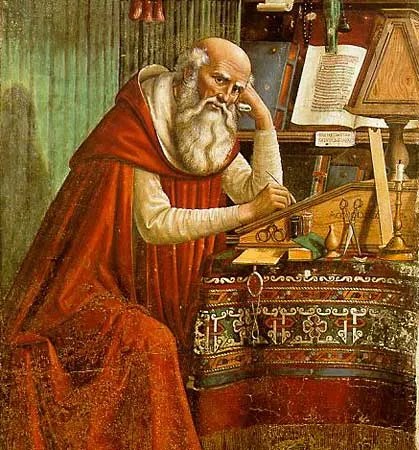
What did the Early church writers say on the matter?
https://www.newadvent.org/fathers/3007.htm – Jerome: Died 420 AD in Bethlehem “…he spoke of the brethren of the Lord not as being sons of Mary, but brethren in the sense I have explained, that is to say, brethren in point of kinship not by nature“
The Protoevangelium of James, written roughly 145AD: “And Joseph [was chosen]. . . . And the priest said to Joseph, ‘You have been chosen by lot to take into your keeping the Virgin of the Lord.’ But Joseph refused, saying, ‘I have children, and I am an old man, and she is a young girl“
Origen in AD 248: “And I think it in harmony with reason that Jesus was the first fruit among men of the purity which consists in [perpetual] chastity, and Mary was among women.“
Hilary of Poiters in AD 354: ““If they [the brethren of the Lord] had been Mary’s sons and not those taken from Joseph’s former marriage, she would never have been given over in the moment of the passion [crucifixion] to the apostle John as his mother, the Lord saying to each, ‘Woman, behold your son,’ and to John, ‘Behold your mother’ [John 19:26–27), as he bequeathed filial love to a disciple as a consolation to the one desolate“
Basil of Caesarea: https://www.newadvent.org/fathers/3202260.htm – https://udayton.edu/imri/mary/p/perpetual-virginity-dogmatic-status-and-meaning.php#:~:text=Basil%20the%20Great%20(d%2C%20circa,it%20to%20be%20a%20dogma.
There are many I could continue to list up into the year AD 500. I suspect there will be many who say “500 is too late. There is no way to know that far from Jesus’ life. The truth has already been corrupted by the church by then!”. Though I understand and sympathize with this rebuttal, I do wonder how one trusts the Bible hasn’t been corrupted, or that Jesus really existed. Many of our Biblical manuscripts come from after 500AD, and do not have a full compilation before AD 300. That is plenty of time for you to doubt the preservation of truth.
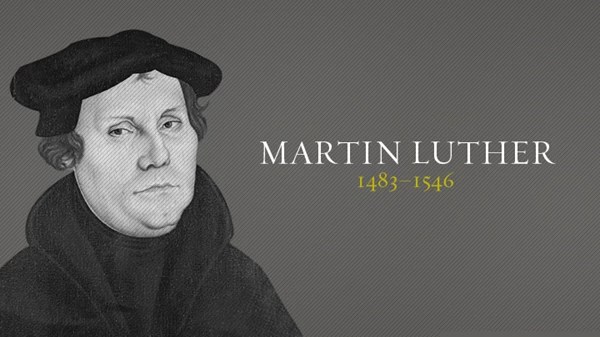
What did the early reformers believe about the perpetual virginity of Mother Mary? Note: They relied only on the Bible for these matters.
https://beggarsallreformation.blogspot.com/2020/04/luther-believed-in-marys-perpetual.html
“When Matthew says that Joseph did not know Mary carnally until she had brought forth her son, it does not follow that he knew her subsequently; on the contrary, it means that he never did know her…Christ, our Saviour, was the real and natural fruit of Mary’s virginal womb… This was without the cooperation of a man, and she remained a virgin after that… Christ… was the only Son of Mary, and the Virgin Mary bore no children besides Him… I am inclined to agree with those who declare that ‘brothers’ really mean ‘cousins’ here, for Holy Writ and the Jews always call cousins brothers…”
In 1523, rumor had it that Luther denied Mary’s perpetual virginity: “Therefore, one cannot from these words [Matt. 1:18] conclude that Mary, after the birth of Christ, became a wife in the usual sense; it is therefore neither to be asserted nor believed…Similarly when Matthew [1:25] says that Joseph did not know Mary carnally until she had brought forth her son, it does not follow that he knew her subsequently; on the contrary, it means that he never did know her…Now the question may occupy us how Christ could have brothers, since He was the only Son of Mary, and the Virgin Mary bore no children besides Him. Some say that Joseph had been married before his marriage to Mary, and that the children of this first wife were later called Christ’s brothers. Others say that Joseph had another wife simultaneously with Mary, for it was permissible for the Jews to have two wives.
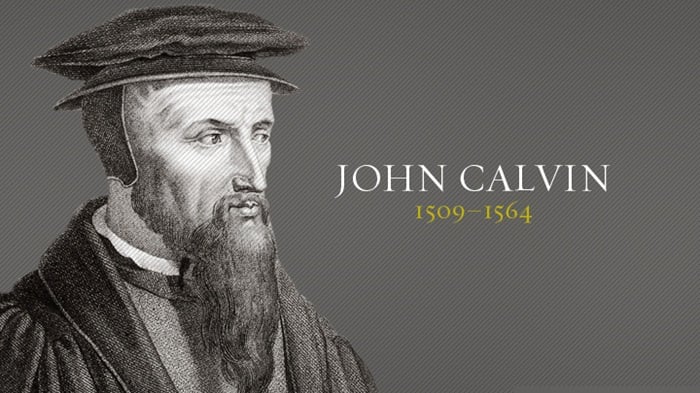
https://www.thedailygenevan.com/blog/2016/12/14/john-calvin-on-the-perpetual-virginity-of-mary
“The word brothers, we have formerly mentioned, is employed, agreeably to the Hebrew idiom, to denote any relatives whatever; and, accordingly, Helvidius displayed excessive ignorance in concluding that Mary must have had many sons, because Christ’s brothers are sometimes mentioned.…By the brethren of the Lord, he means John and James, who were accounted pillars, as he states elsewhere. (Galatians 2:9.) And, agreeably to what is customary in Scripture, he gives the name of brethren to those who were connected with Him by relationship.…“
In conclusion
Simply looking at the evidence understanding the Greek language used, the beliefs of important Church figures, and our reasoning abilities…The conclusion is fairly clear to me. As a Non-Catholic, I understand the difficulty as to adopting views that one may consider as exclusively Catholic in nature. Part of being a “Seeker of the Truth” is to be open to having your mind changed, as mine was when exploring this topic. Just a month ago I would have dogmatically denied the perpetual virginity of Mary, but I no longer feel as firm in that rejection. However, I want to invite the reader to make a conclusion for themselves. If you have questions, comments, concerns, (Not just rampant flaming), please email me at econger@baqash.org
Also, I have provided resources to check out throughout the article and in the section below.
https://www.forerunner.com/blog/jesus-cousins-were-the-apostles-james-and-john
https://www.catholic.com/magazine/print-edition/was-mary-a-perpetual-virgin
https://www.catholic.com/magazine/online-edition/how-we-know-mary-was-a-perpetual-virgin-0
https://www.catholic.com/tract/mary-ever-virgin

 Baqash : To Seek
Leave a reply to My new Project – Baqash : To Seek Cancel reply