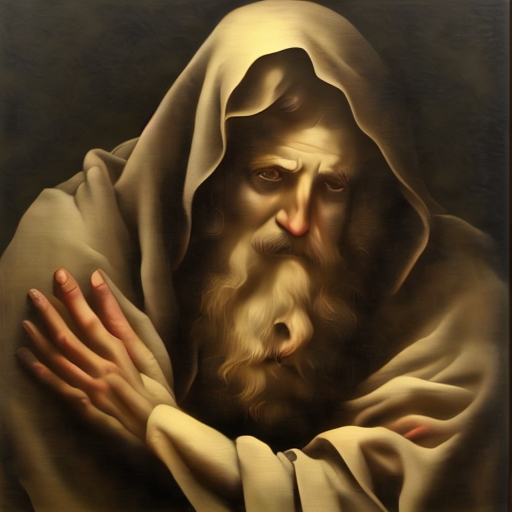


Here in this article I will outline some of the many reasons why I have decided to become a Catholic, instead of maintaining a protestant upbringing, and what this blog is built off of.
This blog shows my evolution from someone inquiring in Catholicism, to someone who is now a Confirmed Catholic. I look forward in the future to sharing some of my notes which led me to becoming Christian to begin with.
Why have I converted to Catholicism? Ultimately, because Scripture Demands it.
As someone raised in a SDA home, around SDA members, I was taught that Scripture is to be the very center of my life. Though I now believe Adventist doctrine does not truly hold to this, I have never known an Adventist to put anything over the words found in the 66 book cannon of Scripture, including those of Ellen White. Most Adventists I met were daily bible readers, who seemed to sincerely wanted the truth from within its pages. Because of this dedication to scripture, I have over my adult/Christian life had to reconcile passages to fit a picture of God that I had created which made the most sense to my intellect when considering an All Loving, All Powerful, All Knowing God.
After a strong departure from Adventism roughly two years after being baptized as an adult into the church, I found myself directionless and resentful towards God after certain understandings of Scripture no longer made sense when put beside certain passages. Specifically, my main issue was Righteousness by faith. The claim is that as an Adventist who affirmed the five protestant “sola”, am saved by Faith Alone, and that my works have no bearing on my salvation. Within the Adventist church, as well as nearly all of Protestantism, this idea is not what it appears to be. If it is Faith alone which saves me, then it logically follows that nothing I do has any bearing on my salvation. But – Within the Adventist church you are required to do certain things. First and foremost, keep the 7th Day Sabbath. They say it is not currently a salvation issue, but will be during the end time tribulation. If probed deeper, it is a salvation issue today, as it is a sign and seal of your recognition and submission to the Law of God, and the Creator – and if you do not obey the law of God, and instead sin against it, you cannot be saved. This contradictory teaching from not only Adventism, but also that of most of Protestantism was a significant factor to my falling away from the Christian faith for a time.
What does this have to do with my conversion? Well, I looked into the claims made by Protestantism : Evangelicals, Baptists, Calvinists, Adventists, Lutherans, Pentecostals, and others…and saw a consistent series of issues.
How exactly am I saved? — How are we to interpret Scripture? Me and my Bible, me, my bible, and my pastor? Or is there someone with real Authority who can “teach” us like the Ethiopian Eunuch? — What does Jesus really say about communion? — What “Church” did Jesus Himself establish? What should I believe about Mary, the mother of Jesus? — What is the significance of Baptism?
Within every non-catholic denomination, I received different and contradictory answers. This leads ultimately and foundationally, to the question. Who has the Authority to bind me to specific teachings and beliefs? The Adventist church may claim that they have the faith of the apostles which persisted underground for 1800 years amongst a wholly apostatized world…but did Jesus establish the Adventist church in Matthew 16 or John 20? At Pentecost, did the Holy Spirit indwell inside a hodgepodge of believers who couldn’t agree on essential doctrines like the broad “universal” church described within Protestantism? Did Jesus and His apostles through the Scriptures tell us that the only way to derive truth about God is through the 66 book canon of Scripture?
Or instead, did Jesus establish the visible, One, Holy, Catholic, and Apostolic Church, the pillar of truth, unified, believing all things in common, with the authority to bind the believers in doctrine, forgive their sins, and lead them to salvation?
The Pope
You can read my full article on this issue HERE: https://baqash.org/2026/03/22/the-pope/ : In this article I get in depth on the topic of the Papacy, as well as Apostolic Succession. That topic is partially dealt with more in an article about Confession: https://baqash.org/2025/10/28/confession-as-a-catholic-sacrament/
Another place where I address this topic is HERE:https://baqash.org/2026/03/26/defending-catholicism-2/
Ultimately, the issue of the Catholic Church comes down to the Papacy. I want to start here, because it is the base concern of all non-catholics. If the authority of the Pope cannot be at least shadowed in scripture, and then fully understood through the early church, then the Catholic Church is likely to be false.
In short, I would argue it like this:
When reading Scripture in light of the Old and New Testaments, it is apparent that God creates a visible authority or light upon a hill to communicate His truths, and the ability to bind His people under an authority. He uses this authority to teach His people and keep the faithful in line and of one accord.
The Apostles themselves were given special authority, likened to that which Christ describes the scribes and pharisees having. From them comes a visible Church Body which can be appealed to. This is not just submission to your local church, but submission to an authoritative body across the world. When reading Matthew 23:1-3, Matthew 18:17-18, John 20:21-23, 1 Timothy 3:15, and Acts 1:20-26 together, we see a whole picture which describes a Church made up of men called by God who have the authority to bind believers with the authority likened to Moses who judged his people, is the pillar of truth, and passes that authority down through the ages. This same body is made up of Bishops, Elders, Deacons, and other authorities. These details are found in Acts 20:28, Acts 14:23, 1 Timothy 3:1-2 and Titus 1:5.
Acts Chapter 2 outlines the early church: “And you will receive the gift of the Holy Spirit. 39 The promise is for you and your children and for all who are far off—for all whom the Lord our God will call…They devoted themselves to the apostles’ teaching…All the believers were together and had everything in common”
Matthew 16, along with Isaiah 22 and John 20 seem to show an authoritative and gift given to the Apostles, and even more particularly to Peter, who is named “Kepha” in the Aramaic, “Petros” in the Greek, and “Petrus” in the Latin which is translated to “Rock” or “Stone”. Matthew 16 alone does not easily interpret Peter as being singled out as the one who has the authority to bind and loose, but that passage alongside Isaiah 22, does infer a connection. Reading these texts along with a notable focus on Peter in Luke 22:32, and John 21:15-17, it seems he is given a particular set of Duties and gifts to lead the faithful.
When we then look further into this issue inside the early Christian writers, (Which I know folk like the SDA, Mormons, and Jehovas Witnesses reject, but most of Protestantism at least partially respect) it is clear that there is an authoritative body, which looks specifically to the Bishop in Rome as a final authority on matters pertaining to the faith.
For example: Jerome in the 4th century: “As I follow no leader save Christ, so I communicate with none but your blessedness, that is with the chair of Peter. For this, I know, is the rock on which the church is built!Matthew 16:18 This is the house where alone the paschal lamb can be rightly eaten“ and in the Second Century Iranaeus of Lyons “y indicating that tradition derived from the apostles, of the very great, the very ancient, and universally known Church founded and organized at Rome by the two most glorious apostles, Peter and Paul; as also [by pointing out] the faith preached to men, which comes down to our time by means of the successions of the bishops. For it is a matter of necessity that every Church should agree with this Church, on account of its preeminent authority…“
If a person accepts the doctrine and understanding of the Pope that the early Christians held to, all other teachings would fall into place, as it would be a simple submission to the Authority of Christ’s Apostolic Church, which would open the door to the possibility of all other dogma and teaching to be true and acceptable.
Other arguments for the Papacy can be found at these locations:
https://www.catholic.com/search?q=papacy&l=en –
https://answeringislam.blog/petrine-primacy-roman-supremacy/ –
https://answeringislam.blog/chrysostom-petrine-primacy/ –
https://www.youtube.com/watch?v=4IVEe66zUJA&pp=ygURdHJlbnQgaG9ybiBwYXBhY3k%3D –
https://www.youtube.com/watch?v=78x2z_Pd884&pp=ygURdHJlbnQgaG9ybiBwYXBhY3k%3D –
The “Mary Stuff”
Another Hot topic which leaned me towards Catholicism is the truth about Mary, and who she is. Ultimately, what tipped me over the edge about Mary is how she is described by the “Apostolic” churches. Most non-traditional non-ancient churches reject the title of “Mother of God” as attributed to Mary. The title is a logical conclusion of the fact that Jesus is God, and Mary is the mother of Jesus, therefore she is the mother of God. This does not mean she created God. It simply means she is a mother to Jesus who is God. If a church denies this conclusion, they are saying more about what they believe about Jesus than they are about Mary. The Catholic Faith isn’t the only of the traditional churches who holds to the most significant teachings about her, but if they are true, then most of Protestantism is a no-go for me. I go through the details about Mary’s perpetual virginity, sinlessness, and other issues in a few locations.
https://baqash.org/2024/03/05/mary-the-perpetual-virgin-and-mother-of-god/
The Eucharist
Here is a full article on the topic:
When Jesus says: “This is my body which is given for you” and “This cup is the new covenant in my blood, which is poured out for you” I believe Him. When He says not only that, but “I am the bread of life. Whoever comes to me will never go hungry, and whoever believes in me will never be thirsty….I am the bread of life…. This is the bread that comes down from heaven, so that one may eat of it and not die. 51 I am the living bread that came down from heaven. Whoever eats of this bread will live forever; and the bread that I will give for the life of the world is my flesh…Very truly, I tell you, unless you eat the flesh of the Son of Man and drink his blood, you have no life in you. 54 Those who eat my flesh and drink my blood have eternal life, and I will raise them up on the last day; 55 for my flesh is true food and my blood is true drink. 56 Those who eat my flesh and drink my blood abide in me, and I in them. 57 Just as the living Father sent me, and I live because of the Father, so whoever eats me will live because of me. 58 This is the bread that came down from heaven, not like that which your ancestors ate, and they died. But the one who eats this bread will live forever.” I believe Him. The early church believed Him too, and so too do some higher church protestant denominations, as well as the traditional “Apostolic” churches. Ignatius of Antioch in the first century “notice those who preach other doctrines, how they affirm that the Father of Christ cannot be known, and how they exhibit enmity and deceit in their dealings with one another. They have no regard for love; they despise the good things we expect hereafter;…They abstain from the Eucharist and from prayer, because they confess not the Eucharist to be the flesh of our Saviour Jesus Christ,“
Other resources:
https://answeringislam.blog/john-6-the-holy-eucharist
How am I saved?
This has been an evolving view throughout my studies over the last few years as I have gotten deeper into Catholicism. My first article written was HERE: https://baqash.org/2024/02/13/how-is-one-saved/, where a few months later after further study, felt as though I missed the mark explaining the topic in its fullest and clearest, so I wrote it again HERE: https://baqash.org/2024/03/15/salvation-a-rework/. I will re-write this article again, with my further understanding as of now.
Essentially, according to the Catholic faith, and my understanding of Scripture, we are saved by: Faith initially, which itself is a gift of God, which makes us right through Baptism with God, justifying us to Himself, adopting us into His Holy Family, and calling us to be saints and priests for His kingdom. After which, we are called to obey and abide in Christ. We must obey Him to maintain our relationship with Him, as our works show the genuine nature of our faith in Him. As James says, “Faith without Works is dead”, and it is not faith alone which saves us, but faith and works. Works are not abiding in the Law, for the Law is done away with and was a shadow of what is to come in Christ-a new covenant, a new law, and a new way of life. In Christ we become a new creation, which is called to be Holy and perfect. There is no number of works one must do to be saved, nor is there a quota for how many bad things you can do to be lost, but it is the posture of your heart which determines the works you do. Certain works display that your faith is dead, and must be revived. As Christ says to the Church in Ephesus “Nevertheless I have this against you, that you have left your first love. 5 Remember therefore from where you have fallen; repent and do the first works, or else I will come to you quickly and remove your lampstand from its place—unless you repent.” we must hold tightly to our first love, so that Christ does not give our light to someone else who will spread His truth. As Christ says of those who do not produce good works, “Every tree that does not bear good fruit is cut down and thrown into the fire.” producing fruit is a requirement.
We are saved ultimately by the Free gift of God which enables us to produce fruit, work in love, and obey Him, through the Holy Spirit’s sanctifying Grace.
This is how the Church says we are saved:
1987 The grace of the Holy Spirit has the power to justify us, that is, to cleanse us from our sins and to communicate to us “the righteousness of God through faith in Jesus Christ” and through Baptism:34…1988 Through the power of the Holy Spirit we take part in Christ’s Passion by dying to sin, and in his Resurrection by being born to a new life; we are members of his Body which is the Church, branches grafted onto the vine which is himself:…Moved by grace, man turns toward God and away from sin, thus accepting forgiveness and righteousness from on high. “Justification is not only the remission of sins, but also the sanctification and renewal of the interior man.39…1990 Justification detaches man from sin which contradicts the love of God, and purifies his heart of sin. Justification follows upon God’s merciful initiative of offering forgiveness. It reconciles man with God. It frees from the enslavement to sin, and it heals…
Conclusion
These are just a few reasons why I am Catholic. Hopefully, this give you, the reader a better understanding of where I am coming from, and maybe a better view on what the Catholic Church actually teaches on these matters.


Leave a comment